Key Insights
Roles and Responsibilities of HR Admin
An HR admin is responsible for all activities related to human resources. He/she manages employee data, provides support for recruitment, handles payroll, and ensures compliance with rules and regulations. The HR Admin also plays the important role of linking the employees and the management through effective communication while at the same time ensuring that a productive and compliant workplace is maintained.
Skills Required to be HR Admin
It takes strong communication, organised, and technical skills to shine as an HR admin. Mastery of HR software, payroll systems, and compliance knowledge makes daily HR functions efficient and accurate.
HR Admin Roles and Responsibilities
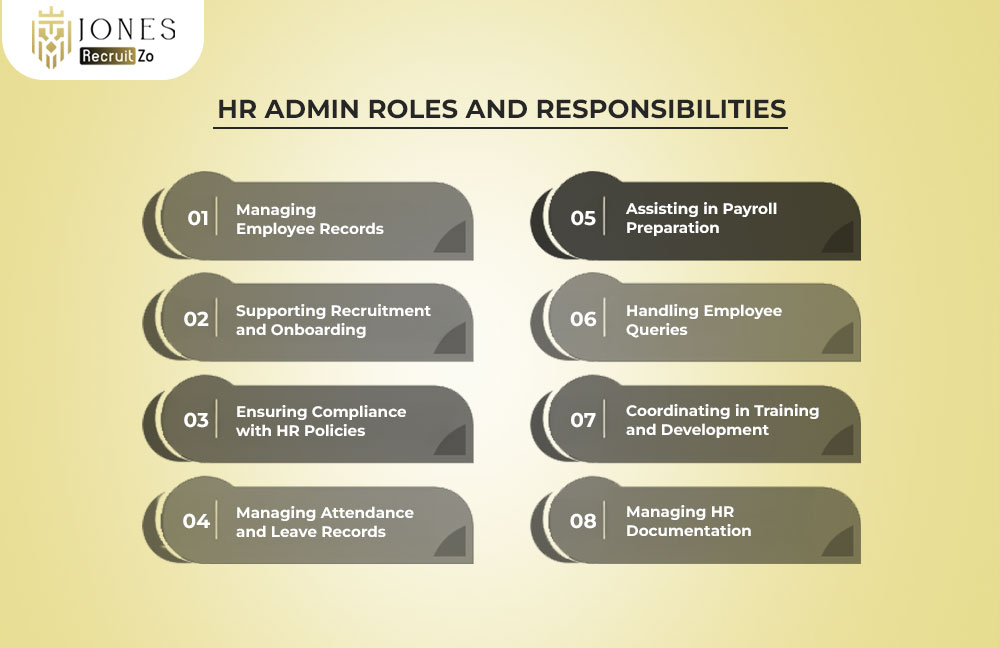
An HR admin plays a crucial role in maintaining the smooth functioning of an organisation’s human resources department. From managing employee data to ensuring legal compliance, HR Admins act as the backbone of HR operations. Their role ensures the company remains structured, compliant, and people-orientateed.
Managing Employee Records
The HR admin’s most important function is to keep the staff records accurate and up-to-date at all times. Employee personal details, job titles, salary structures, performance evaluations, and dismissal records are all included in this. The right paperwork not only keeps the company within the bounds of the laws but also provides the basis for easy reporting and smart decision-making.
Supporting Recruitment and Onboarding
The HR Admins are there to help by doing all sorts of things like scheduling interviews, coordinating the hiring process with managers, and managing candidate communications. The same goes for onboarding new people, where they get involved by preparing offer letters, running induction sessions, and making sure everything is in place for the new person to join.
The new hires have a pleasant experience, and the company’s reputation as an employer is further enhanced by the effective support during these stages.
Ensuring Compliance with HR Policies
Compliance is a necessary and important part of HR administration. It is the task of HR Admins to put into action the company policies that are consistent with the labour laws and industry regulations. They ensure HR policy compliance, keep compliance records, and provide support in audits. Compliance makes it easier to minimise risks and helps to create a fair and safe working environment all the time.
Managing Attendance and Leave Records
Precise monitoring of employees’ attendance and leave is crucial for the maintenance of productivity and payroll accuracy. HR Admins manage attendance systems, check time records, and grant leave. They follow leave rules applied at the workplace, but they also consider the needs of the employees and the organisation’s efficiency at the same time.
Assisting in Payroll Preparation
HR Admins are in constant connection with the finance or payroll department to make sure that salaries are processed on time and accurately. Their tasks include making attendance data, salary increases, bonuses, and deduction verification and calculation. Concentration on each single detail is very important here, since payroll mistakes can lead to dissatisfaction and distrust among the employees.
Handling Employee Queries
An HR Admin is the main contact person for the employees in case of HR-related issues. It does not matter if the inquiry is about leave balance, benefits, or policies; HR Admin provides clear communication and prompt resolutions. Their skill in efficient handling of the queries positively affects the work atmosphere and employee participation.
Coordinating in Training and Development
HR Admins are significant in the planning and governance of the training of the employees. They prepare the logistics for the workshops, monitor the participation and keep the training records. Skill development efforts supported by the organisation help to keep employees competitive and give them a reason to grow within the organisation.
Managing HR Documentation
Transparency and accountability require proper documentation. HR Admins keep all the files related to HR, such as contracts, appraisal forms, compliance records, and employee correspondence. The most common method of record-keeping these days is the use of digital systems that not only keep the data secure but are also easy to retrieve whenever it is needed.
Challenges Faced by HR Admins
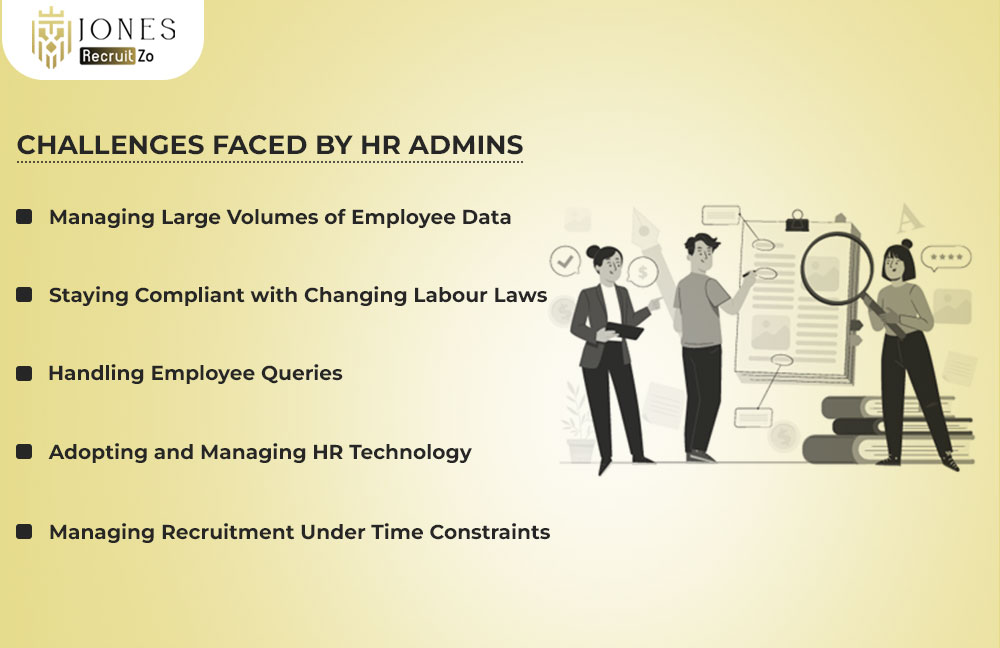
While HR Admins perform crucial tasks, they also face several challenges that test their efficiency and adaptability. From managing data to staying compliant, each area demands attention to detail and up-to-date knowledge of regulations.
Managing Large Volumes of Employee Data
With the expansion of companies, the corresponding employee data also increases greatly. HR Admins still have to tackle the already huge databases with the necessary speed and trickery while at the same time being accurate and observing the confidentiality. The use of HR management software is one way through which the whole process is made easier, and the occurrence of manual errors is reduced.
Staying Compliant with Changing Labour Laws
Labour laws and HR regulations are not static; they change regularly, and HR admins have to be the ones in the know about it. To be abreast of such changes and then make sure that the company policies are in line with them is of utmost importance. Not complying can result in penalties and even lawsuits.
Handling Employee Queries
Dealing with a large number of employee issues at the same time can be very hard. HR Admins have to put themselves in the employees’ shoes yet keep a professional demeanour while resolving the issues quickly. Good communication skills and being knowledgeable about the clear policies are the prerequisites for effectively managing this task.
Adopting and Managing HR Technology
The HR digitalisation has brought along the new technologies and platforms where the workforce data is managed. HR Admins have to be very quick in adapting to these technologies, and the smooth implementation of the process as well as the training of the staff becomes their responsibility. On the one hand, automation makes things easier, but on the other hand, it calls for the same level of technical adaptability.
Managing Recruitment Under Time Constraints
It is a tough task to meet the recruitment deadlines at the same time as quality hiring. HR Admins are usually the ones who have to bear the pressure when coordinating the different stages of recruitment. Their efficiency in time management and teamwork with the hiring managers are the two things that help them to overcome this issue.
Skills Required for an HR Admin
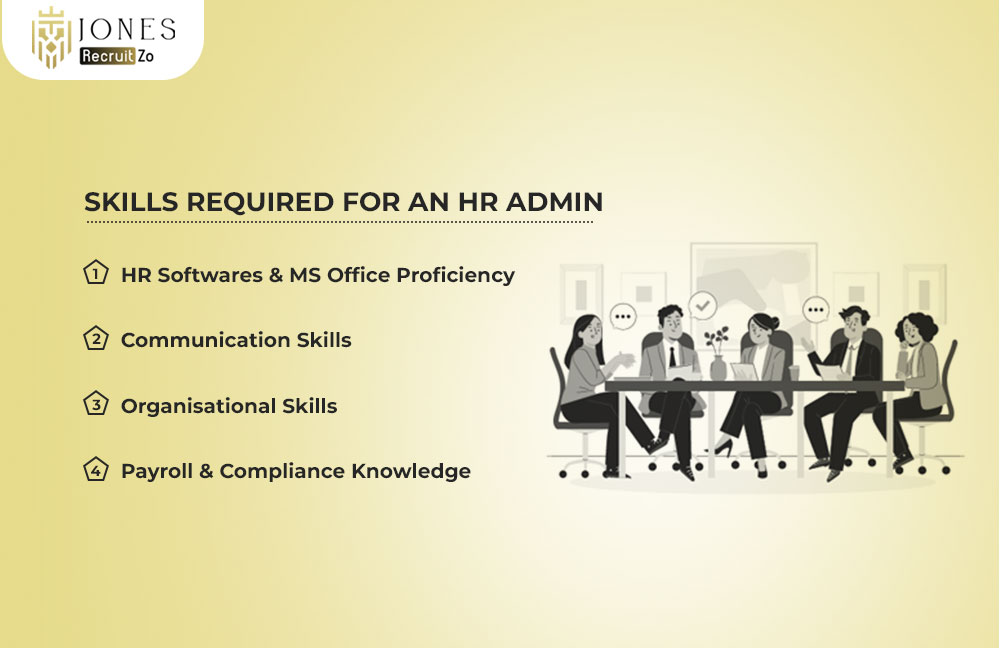
To succeed as an HR Admin, one must possess a blend of technical, interpersonal, and organisational skills. These skills ensure efficient management of HR operations while maintaining professionalism and compliance.
HR Softwares & MS Office Proficiency
HR software expertise, which consists of SAP HR, Zoho People, and Workday, is mandatory training for employee data maintenance and process automation. On top of that, the daily use of Excel, Word, and PowerPoint, office tools, for reporting, documentation, and data analysis, is also expected. Technical competence quickens and enhances the accuracy of the administrative work.
Communication Skills
Communication expertise in the form of both oral and written is the main point for HR Admins. The HR Admins often will be speaking to the company’s staff, employers, and outside parties, and that will be done with the utmost professionalism, and that requires the communication being clear. Building trust and informing everyone perfectly about the HR-related issues are some of the benefits of communication done effectively.
Organisational Skills
The activities performed by HR Admins include, but are not limited to, the coordination of interviews, keeping up the records, etc., and all of these take up the same time. It is the excellence in organisational skills that enables carrying out these tasks with no errors, thus managing them efficiently. As a matter of fact, prioritisation and time management are very important for keeping the HR operations flowing smoothly.
Payroll & Compliance Knowledge
The HR Admins must have a good command of the area of payroll and compliance regulations. In other words, they must be aware of mandatory payments such as Provident Fund, Employee State Insurance,and gratuity, as well as income tax deductions. Compliance with these laws not only enhances the organisation’s reputation but also saves it from the imposition of fines.
FAQs
1) What are the main roles and responsibilities of an HR Admin?
The HR Admin oversees employee documents, helps in hiring the right people, takes care of legal rules, and processes payroll. They are a very important part of the HR department in terms of organisation and adherence to law.
2) What are the key skills needed to be an HR administrator?
The most important skills are communication, planning, expertise in HR software, and understanding of payment and compliance. These skills make HR management more efficient and create a good experience for employees.
3) What are the key tools an HR Admin uses?
HR Admins mainly work with HRMS software like Zoho People, SAP HR, and Workday, plus they use Microsoft Office applications for documentation and reporting. These applications assist in making the administrative tasks faster and improving the accuracy of data management.