Key Insights
Differences Between Job Description and Job Specification
In essence, job descriptions are about what the job involves, and job specifications are about who is the best fit to do it. These two documents together help in recruitment and management of performance by providing a complete view of the situation.
Job Description Meaning
A job description is a document that narrates the responsibilities, duties, and scope of a job. It makes clear not only to workers but also to the company what is required to be done in the daily job.
Job Specification Meaning
A job specification is a document that mentions the qualifications, experience, and skills needed for a job. It is the help of HR teams in selecting candidates whose profiles are compatible with the job requirements.
Key Components of a Job Description & Job Specification
The two documents consist of main characteristics such as job title, duties, qualifications, experience, and personal qualities. Having these characteristics enables organisations to draw in and assess the most fitting candidates.
Difference Between Job Description and Job Specification
Even though the terms ‘job description’ and ‘job specification’ are almost synonyms, they still emphasise different aspects of the job. While a job description is concerned with the tasks and activities of the job, the job specification states the characteristics of the person that must have the job for successful performance in it. When used together, they provide the base for proper HR practices that, in effect, steer the organisation into the right recruitment and performance expectation management.
What is a Job Description?
A job description is a document which lays down the most important facts about a certain position, comprising its responsibilities, limits of activity, responsibility hierarchy, and the nature of the workplace. It is a written statement which acts as a guide for the employers and employees through the whole process of job expectations, thus making it very clear for both sides.
Job descriptions are an integral part of the HR process for recruitment, onboarding, and performance management. They make sure that the employee and the company are on the same page regarding the job requirements from the first day.
Key Components of a Job Description

Each job description is structured with essential sections that communicate the full picture of a position.
Job Title
The job title is the label of the specific post in the company. It indicates the degree of authority and often gives an instant idea of where the employee stands in the hierarchy. Apart from that, the clear and consistent job titles across the board also help in better communication and standardisation of departments.
Job Summary
The job summary is a short retelling of the role; its primary objectives and purpose are highlighted. It is like a quick introduction to the position, and it tells what the job contributes to the organisation. Therefore, a concise summary is a must since it ensures that candidates quickly understand the role’s importance before getting into details of responsibilities.
Duties and Responsibilities
The very core of this section defines the basic and compulsory tasks and functions of the employee. It indicates the areas of accountability and performance expectations, thus making the role clear to both HR and the candidate. Accurate duty and responsibility listings prevent misunderstandings, improve the evaluation process and help keep the performance standards consistent and smooth.
Working Conditions
Working conditions are the factors that describe the environment the employee will be working in. This section consists of work hours, physical demands, travelling, and workplace safety considerations, amongst others. Giving this information to the candidate is a sign of transparency, and it also makes the candidate ready and well-informed before making a decision.
What is a Job Specification?
A job specification highlights the qualifications, skills, and personal attributes that a job requires. A job description tells what the job is, and a job specification tells who is capable of doing it well. A document like this provides assistance in recruiting and managing by allowing them to narrow down the list of candidates whose proficiencies correspond with the needs of the organisation.
Key Components of a Job Specification
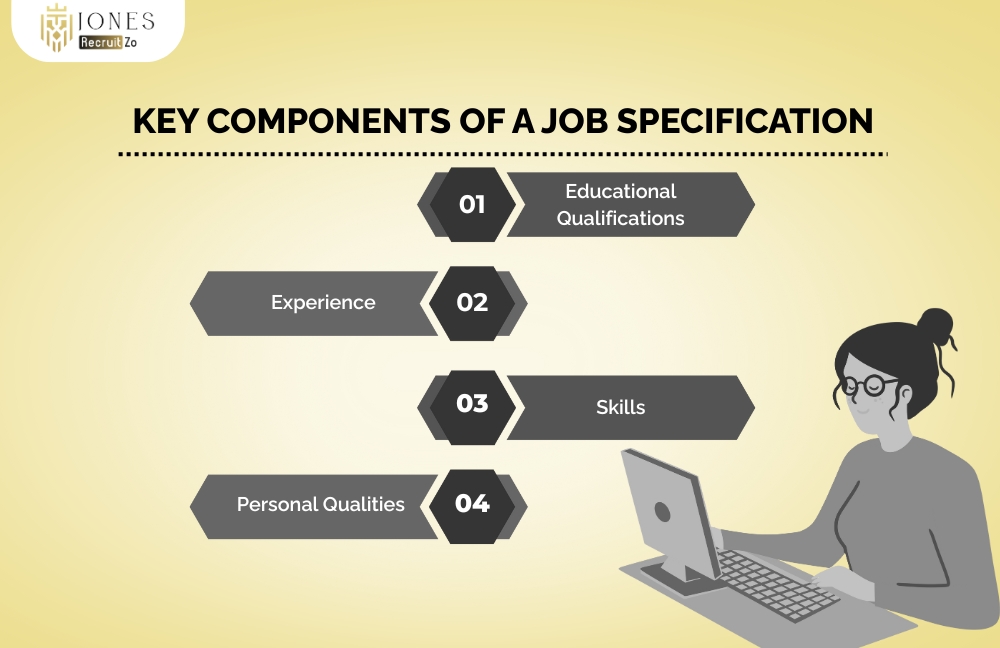
A well-structured job specification ensures only the most relevant candidates are considered for a role.
Educational Qualifications
This part reveals the academic background and certifications required for the position. It assists HR in sorting candidates who possess the appropriate educational basis and thus, are of the technical or theoretical knowledge standards. For specialised positions, professional courses or degrees will be the main factors in the selection of candidates.
Experience
Experience requirements provide how many years of professional exposure a candidate should have in the same role or in the same industry. Moreover, it specifies the kind of experience like leadership, technical, or client-management required for the job. Including experience criteria, it becomes clear that candidates are able to occupy their new positions quickly and with little or no supervision.
Skills
Skills are the specific technical or soft competencies necessary for the successful completion of the job. The list can include knowledge of software, good communication, or analytical skills, etc. Listing both hard and soft skills assures the recruitment of a candidate who is well-rounded and fits the operational and cultural needs of the company.
Personal Qualities
This section highlights the personality traits and behavioural attributes that suit the role. Examples include teamwork, integrity, adaptability, or leadership qualities. Emphasising personal qualities ensures a better organisational fit, reducing turnover and increasing long-term employee satisfaction.
Key Differences Between Job Description and Job Specification
Even though the two documents support one another, they do have different areas of concentration, content, and purposes of use. By knowing these distinctions, Human Resources can better take advantage of the two documents in recruitment and performance appraisal.
Focus
The job description is centered on the tasks that need to be performed in a position, while the job specification is about who would be able to perform the tasks. The job description defines job content, and the job specification defines candidate’s attributes. The two together create a complete picture of the job and the best person for it.
Purpose
Job description’s purpose is to explain clearly the job expectations and the duties assigned. On the other hand, job specification’s purpose is to point out the right person according to his/her qualifications and competencies. Job descriptions and job specifications are thus both important in making sure that there is a match between employee competencies and job requirements.
Content
Job descriptions cover the areas of responsibilities, scope of the job, and work environment. Whereas qualifications, skills, and personal characteristics are the main points of job specifications. This content difference enables HR departments to look into both job-related and person-related aspects of hiring.
Use in HR
In HR practice, job descriptions are the main tool of organizations for role designing, performance evaluation, and career path definition. Job specifications are important during recruitment, assessment, and selection processes. Together they make the hiring process more efficient, ensure compliance, and provide support for workforce planning.
Example
For example, consider a Marketing Manager position.T he Job Description would include tasks like developing campaigns, managing budgets, and leading the marketing team. The Job Specification would mention qualifications like an MBA in Marketing, 5+ years of experience, creativity, and leadership skills. This example highlights how both documents work together to attract and select the ideal candidate.
FAQ
1) What is the difference between a job description and a job specification?
The former covers everything about the position such as duties, responsibilities, and its area of influence, while the latter lists the necessary qualifications, skills, and personal characteristics that the person filling the position must possess to be effective.
2) How do job descriptions and job specifications help in the recruitment process?
They make sure that recruiters and candidates have a mutual and precise understanding of job expectations. They work together to make hiring more efficient, to improve job compatibility and to cut down on turnover.
3) What are the key components of a job description?
The job title, summary, duties and responsibilities, and working conditions which together express the nature and requirements of the job are the main elements.
4) What are the key components of a job specification?
A job specification consists of educational qualifications, experience, skills, and personal qualities which, to some extent, are the characteristics of the ideal candidate for the role.