Types of HR Policies
The varieties of HR policies are many, and they include all aspects of HR from the very beginning of the employee’s journey through the company up to their retirement or resignation. They all have different functions, but in a way, all are interconnected and contribute in their own way to the proper running of the organisation, employee contentment, and legal compliance. Gradually, they together constitute the basis that HR can manage people in an efficient way.
Importance of HR policies
HR policies are crucial for the organisation as they provide a framework, a system of justice, and understanding of the workplace practices. Besides, they make it easier for the organisations to uphold the labour law and at the same time create a good, clear, and properly managed work culture. In a nutshell, good HR policies are the ones that lead to the alignment of business objectives and employee welfare.
What Are HR Policies?
The HR policies are the formal rules that govern how a company deals with its employees. They include areas such as hiring, attendance, pay, evaluation, and conduct in the workplace to make things fair and uniform. HR policies are simply the connection between business objectives and employee requirements. They create a framework for decision-making, communication, and resolution of difficulties, thus helping the company to have a structured, compliant, and supportive environment, which is what the law requires.
Types of HR Policies
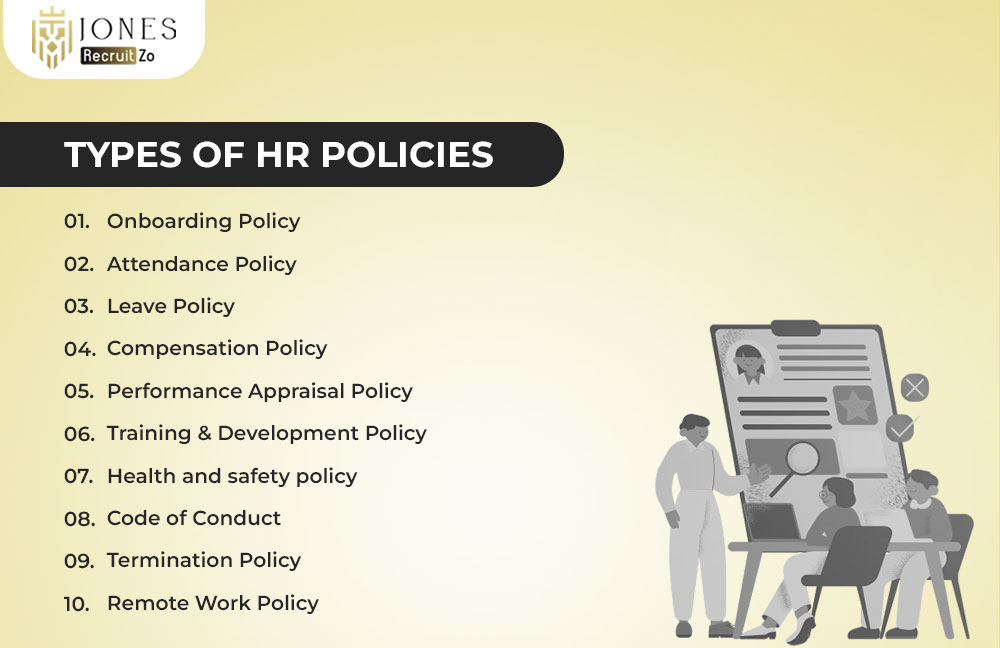
HR policies differ depending on organisational size, industry, and culture, but certain key policies are essential for every company. These policies ensure clarity, accountability, and operational efficiency across all departments.
Onboarding Policy
A policy of onboarding allows for a great transition for new employees who come to the company. It spells out the whole process of recruitment, orientation hours, and paperwork while making sure each new employee is well-informed about the vision, organisation, and demands of the firm. This policy actually rectifies the issue of retention and workers’ engagement by setting the stage right for the entire period from day one.
Attendance Policy
The attendance policy sets forth the rules regarding working hours, being on time, and absence from work. It makes sure that the personnel are regularly present at work and sets up penalties for those who are frequently absent or late. Such a policy brings about a culture of discipline and uniformity while at the same time being fair to all the teams.
Leave Policy
A leave policy is the one that indicates specific periods when the employee will not attend work and under what conditions; that is, when he/she will go on annual, sick, maternity, paternity, and casual leave. Furthermore, the policy specifies which employees are entitled to take leaves, what the approval process is, and what documentation is needed. This policy helps ensure that unhindered employees keep up the good work, and at the same time workers manage to join their families and friends without work getting in their way.
Compensation Policy
One of the important aspects that the compensation policy deals with is the manner in which the employees are paid and rewarded for their input. It covers salaries, increments, bonuses, and benefits in order to be fair to the employees as per the market and, to some extent, even when they are doing the same work internally. The existence of a clear compensation policy invites and keeps good employees while at the same time making sure that all employees get paid according to their real value.
Performance Appraisal Policy
The performance appraisal policy is an instrument that presents a structured framework for the assessment of employee performance. The policy specifies the review process, how often the reviews will be, the performance indicators, and the ways through which an employee may receive feedback. By conducting regular performance appraisals, organisations can reward high performers, spot their weaknesses, and set their goals in line with the company’s objectives.
Training & Development Policy
This policy helps employees to develop professionally and grow continuously through training, seminars, and workshops. It also demonstrates the company’s commitment to employee growth and career development. When companies invest in their employees’ training and development, they are indirectly creating a workforce that is more skilled and more engaged.
Health and safety policy
A health and safety policy is a written assurance from the organisation to its employees that the latter will have a safe and secure workplace always. Furthermore, it includes precautions to take in case of an accident, how to handle emergencies, and the health standards that should be maintained in the work environment. Compliance with health and safety laws is one of the outcomes of this policy, but a more protected workforce is the main one.
Code of Conduct
The code of conduct exposes the behaviour standards for the workers along with the management. The guidelines that it includes are ethical behaviour, professionalism, respect, and integrity in the workplace. The application of this policy is a way of creating an atmosphere that is positive, and at the same time, it also cuts down on disputes, thus fostering a more respectful and inclusive environment.
Termination Policy
The termination policy outlines the grounds and the procedures for the end of employment, whether it is by choice or not. The policy talks about notice periods, final settlements, exit interviews and clearance processes. A termination policy that is clear and widely disseminated makes sure that the whole process is carried out with professionalism, within the law, and in a respectful manner for the organisation as well as the employee.
Remote Work Policy
The policy for remote work is necessary as flexible work arrangements become more and more common; it clarifies the expectations of the employees that are working from home or different places. The policy outlines communication protocols, performance monitoring, data security, and work-hour guidelines. The policy makes sure that employees are accountable and also gets them to maintain a good work-life balance while at the same time allowing the organisation to operate flexibly.
Why Are HR Policies Important?
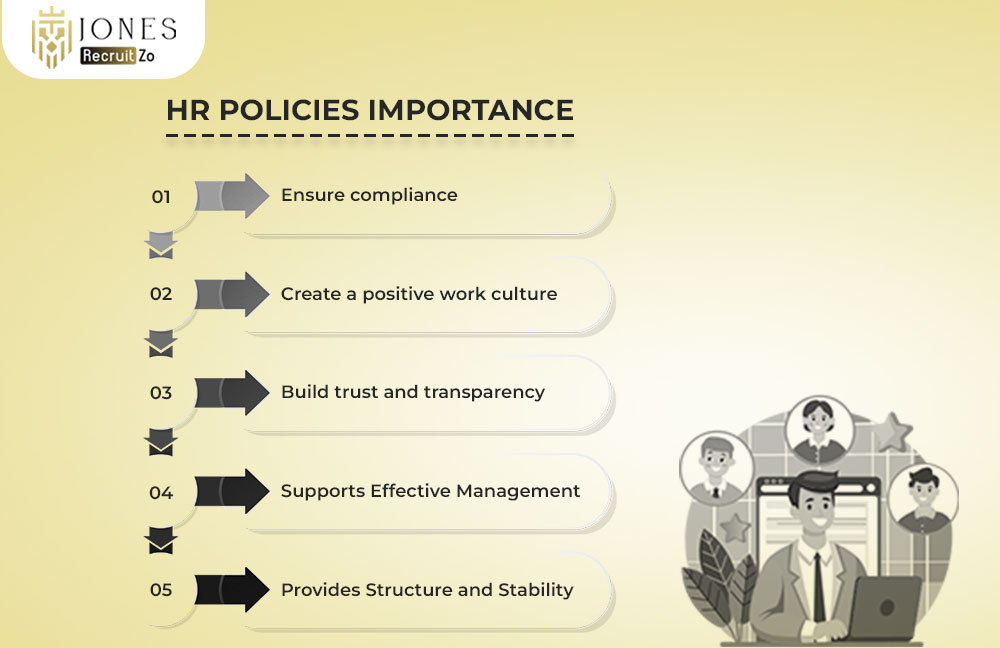
HR policies are essential for maintaining fairness, consistency, and transparency in the workplace. They help prevent misunderstandings, ensure compliance with laws, and protect both employees and employers. By defining clear guidelines, HR policies also promote a positive work culture and support effective people management.
Ensure compliance
HR policy compliance is the main reason they are on the top list. The very documentation of the policies acts as a shield for the companies legally by making sure that all the HR activities go along the lines of the law. It is through labour laws, inequalities in employment, and safety rules that the companies get the needed protection from legal territories.
Create a positive work culture
HR rules are a factor in how the staff views the firm. Policies that are open and just lead to the development of trust, openness, and kindness among the employees. The workers will have a greater sense of belonging and be more energised in their positions if the company’s principles and standards of conduct are clear to them.
Build trust and transparency
One of the major things that consistent and transparent HR policies do is to build trust between the employees and the management. They clear up the situation very well and even try to point out what really is the case in different situations — from promotions to grievances. This clarity increases the relationship between the workers and the company and makes communication more open.
Supports Effective Management
Policies are the main guidelines for HR professionals and managers when it comes to day-to-day operations. Such policies make hiring, leave approval, and conflict resolution easier. By bringing uniformity to HR practices, these policies allow better decision-making, thus increasing the efficiency and accountability in the departments.
Provides Structure and Stability
Properly outlined HR policies bring about stability in the workplace which is the result of uncertainty reduction and the consistent application of the same rule to all the employees. Employers will, by whatever appraisal or compensation policy they have, be guaranteed the same treatment, thus preventing making it less and ultimately supporting the organisational success in the long run.
FAQs
1) What are the different types of HR policies?
The various kinds of HR policies consist of onboarding, attendance, leave, compensation, performance appraisal, training and development, code of conduct, and termination policies. Each policy has its own distinct function in the area of employee relations and compliance within the organisation.
2) Why Are HR Policies Important?
HR policies are significant as they guarantee legal compliance, treat employees fairly, and manage their relationships with the organisation very openly. They also help to keep order and improve the culture at the workplace and give guidelines to HR professionals in the day to day operations.
3) What Are HR Policies?
HR policies are basically written guidelines that state how an organisation deals with all different aspects of the employment relationship. These guidelines cover the whole cycle of employment, starting from hiring and leave to performance management and workplace conduct.
4) How to structure an HR policy?
An HR policy should consist of an introduction, purpose, scope, detailed procedures, employee and management responsibilities, and compliance references. It has to be clear, practical, and continuously updated to mirror the current laws and needs of the organisation.