Key Insights
Difference Between Internal and External Recruitment
Internal recruitment fills positions using existing employees who are already familiar with the company culture and processes. External recruitment attracts candidates from outside the organization, bringing in new skills, ideas, and perspectives.
Advantages of Internal Recruitment
Internal recruitment reduces hiring costs, speeds up onboarding, boosts employee morale, encourages loyalty, and supports succession planning.
Advantages of External Recruitment
External recruitment provides access to a wider talent pool, introduces new skills and experiences, fosters innovation, and enhances the organization’s competitiveness.
What is Internal Recruitment?

Internal recruitment or internal hiring refers to the process of recruiting vacant positions by promoting, transferring, or reassigning internal employees. It utilizes talent available, lowers recruitment expenses, and speeds up the process of bringing in talent. By hiring internally, employees get to boost their morale through the realization that their efforts and performance are compensated. Those companies that have adopted the internal recruitment process successfully can assure continuity, institutional knowledge, and reinforce succession planning. The difference between internal and external recruitment is highlighted in how internal recruitment prioritizes existing employees, while external recruitment looks outside the organization.
What is External Recruitment?

External recruitment refers to the hiring of candidates outside the organization via job portals, recruitment agencies, referrals, or campus drives. It brings new ideas, specialized skills, and diversity to the workforce. External recruitment is also very helpful in filling available gaps that cannot be filled by the internal employees. With the application of external hiring, organizations can achieve a more extensive talent pool and new views that will facilitate growth. Understanding the difference between external and internal recruitment ensures that HR teams select the most suitable approach for each role.
Key Differences Between Internal and External Recruitment
Candidate pool, the cost, time of hiring, onboarding, employee morale, and risk are some of the differences between internal and external recruitment. Internal recruitment is quicker, cheaper, and less risky whereas external recruitment offers new skills, introduction, and variety. Firms have to take into account these differences when formulating recruitment plans. The difference between internal and external recruitment is crucial for workforce planning, ensuring that each role is filled with the right talent efficiently.
Candidate Pool
Internal recruitment uses existing staff as its source, which restricts the range of candidates, however, it offers familiarity and predictability. External recruitment will expose it to a bigger talent pool that is more diverse in their skills, experiences and backgrounds. External recruitment together with internal recruitment will enable organizations to strike the right balance between continuity and informativeness. Organizations can strategically evaluate the time to take advantage of internal hiring and when to seek external sources of specialized expertise.
Cost
Internal recruitment is also cost-efficient because it requires no job advertisement or recruitment agency, and the process of recruitment does not involve time-consuming screening. External recruitment is more expensive as it demands greater attention on advertising, hiring campaigns, and onboarding, but introduces specific skills and innovation. Organizations have to consider the cost savings associated with internal recruiting against the advantages of new talents gained in the process of external recruiting.
Hiring Time
Internal hiring is quicker since the employees are familiar with processes, systems and culture of the company. External recruitment entails finding, screening and hiring of applicants, which is more time consuming. External recruitment may offer highly specialized or strategic talent even over the longer period. Understanding the difference between internal and external recruitment helps HR teams plan timelines and resource allocation efficiently.
Onboarding and Training
In-house recruits require little training because they understand the policies and procedures of the company. Training is more oriented on job-related duties. Expatriates need to undergo intensive training to learn the organizational culture, processes and norms. External recruitment should be properly onboarded to enhance a smooth integration and increased long term performance. The balance between the internal and external recruitment strategies enables organizations to control the onboarding endeavors effectively.
Employee Morale
Internal recruitment enhances employee morale since performance is rewarded and career growth is offered. The internal promotion or transfer can make the employees feel valued. The overuse of external recruitment may de-motivate the internal employees in case they feel that there is no career progression available to them. Organizations need to strike a balance between the two recruitment practices to ensure engagement and satisfaction.
Fresh Perspectives
External recruitment incorporates new ideologies, contemporary practices, and new ways of doing things, which is paramount to remaining in the market. This continuity and stability are guaranteed by internal recruitment. The blending of internal and external recruitment helps organizations to enjoy the advantage of institutional knowledge and enhance innovation and advancement.
Succession Planning
Internal recruitment helps in succession planning since it equips the current staff to assume the leadership and other vital positions. External recruitment is used alongside succession planning as it introduces talent that has specialized skills and new outlook. The difference between internal and external recruitment becomes evident in how succession planning is managed. Internal recruitment preserves the continuation whereas external recruitment impetuses creativity.
Risk
Internal recruitment is less risky because the organization is aware of the potential and suitability of the employee to the organization. External recruitment is more uncertain but has a possibility of bringing in candidates whose skills or ideas are more specialized. The organizations ought to put in place a structured hiring and onboarding to reduce risk associated with external recruitment.
Advantages of Internal Recruitment
Internal hiring will save money, accelerate the process, enhance morale, and reduce risk of hiring. It is especially powerful in those jobs where continuity and institutional knowledge is needed. The mix of internal and external recruitment will ensure that the growth and stability is realized.
Cost-effective
The internal recruitment is economical since it removes the costs of advertisement of the job, recruitment firms, and background checks. Through the transfer or promotion of employees within the organization, organizations will maintain talent, save on costs and enhance the stability of the workforce. The tactic enables firms to maximize the HR budgets and train its present employees to undertake greater roles.
Quicker onboarding
Internal candidates are quicker to adapt to new jobs because they are familiar with the company culture, processes and systems. Faster onboarding reduces the productivity disruption and enables the employees to deliver at first day on the job. In-house recruiting simplifies the process of transition and contributes to the business continuity.
Boosts morale
Promotion or transfer of internal workers is evidence that the efforts and the dedication are rewarded. This increases the morale of employees, their loyalty and also drives the employees to do their best. Motivated employees lower the turnover level, and create a favorable organizational culture.
Lowers risk
There is also reduced hiring risk with the internal recruitment process because the organization is well aware of the skills, work habits and cultural fit of the employee. Internal recruitment is a less risky option, especially in urgent positions or as a leader, as it is more predictable and easier to integrate.
Advantages of External Recruitment
External recruitment brings in new skills, experience and opinions that might not be present internally. It enables the companies to tap into a wider pool of talent, enhance diversity and acquire expertise. In case the internal candidates are not qualified to handle the necessary skills, then external recruitment becomes crucial in the development and innovation of organizations.
Fresh skills and ideas
Outsourced employees introduce new talents, business expertise and novel thinking into the organization. New views can enhance operations, bring new strategies, and motivate productivity. Through external talent integration, the companies will be in a position to be competitive and flexible in the fast-evolving market.
Larger talent pool
External recruitment has access to more and diverse talent pool. Candidates who have specialized experience, leadership skills or unique skills in their line of expertise can only be obtained through organizational recruitment. This increases the possibilities to employ the most suitable candidates to vacancies that are critical.
Diversity in workforce
Outsourcing enhances diversification in terms of culture, education and experience. Diversity improves the efficacy of problem solving, innovation and teamwork. External recruitment assists organizations to have inclusive staff which enhance overall performance.
Fills skill gaps
External recruitment creates skills and expertise gaps that internal candidates could not have. It also provides the workforce with the ability to respond to new challenges, embrace new technology, and encourage innovation. External hiring can be a strategic move by organizations to be competitive and future ready.
How to Choose the Right Hiring Strategy?
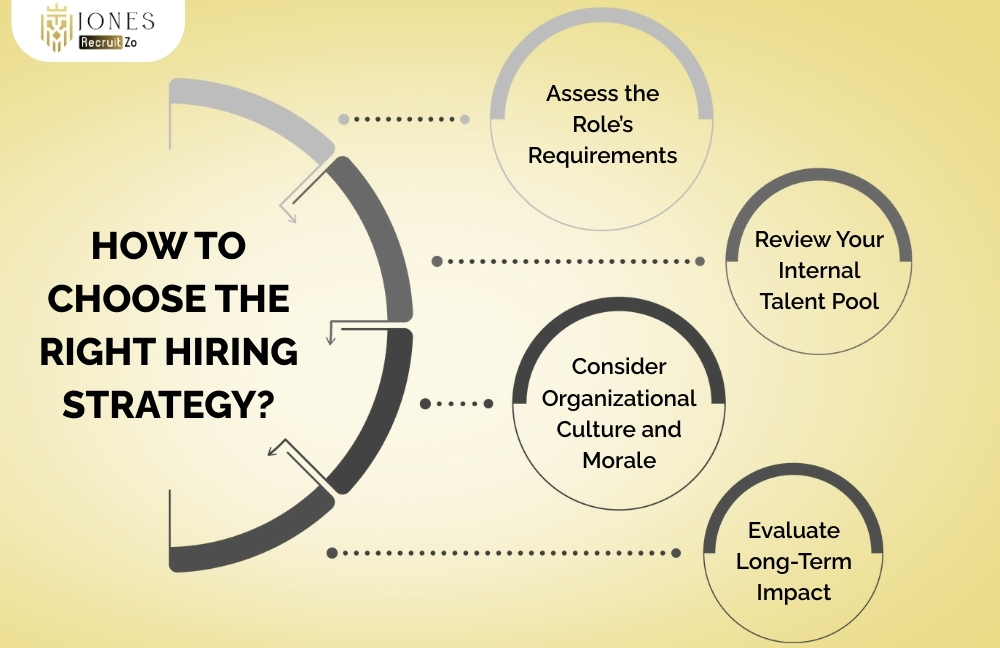
Making the correct hiring strategy is significant in the organizational growth as well as the satisfaction of the employees. When companies consider the issue of whether an offer requires an internal or external recruitment strategy, they need to consider factors that include skills requirements, talent availability, cost, and long-term consequences. The decision has impacts on the success of the role, the morale of the workforce, diversity, and succession planning. By understanding the difference between internal and external recruitment, HR teams can implement strategies that balance continuity, innovation, and overall organizational performance.
Assess the Role’s Requirements
Knowledge of the institution, specialized skills or innovative thinking. Decide whether the role is knowledge based, skills based, or innovative. Internal recruitment is best applicable in continuity jobs whereas external recruitment is best applicable in specialized jobs. Knowledge of the role can assist the HR teams to select the appropriate option between external and internal recruitment.
Review Your Internal Talent Pool
Assess the current employees in terms of capabilities, potential and readiness to promote or transfer them. Internal recruitment saves on money and shortens the onboarding process as well as rewards performance of employees.
Consider Organizational Culture and Morale
Striking a balance between internal and external recruitment plays a role in preserving morale, employee engagement as well as the culture. When jobs are filled internally, people are likely to be loyal, whereas when recruited externally, there is diversity and new ideas.
Evaluate Long-Term Impact
Imagine succession planning, skill building, and future advancement in making the decision between the internal and external recruitment. A composite strategy will provide stability, innovation and sustainability of the workforce in the long run.
FAQ
1) What are the key differences between internal and external recruitment?
Recruitment internally is more economical and quicker and encourages current employees whereas external recruitment introduces new ideas, specialized talent and diversity.
2) What are the challenges of internal and external recruitment?
In-house recruitment can be restrictive to diversity and innovation. The external method of recruitment may be expensive, time-consuming, and more risky. A combination of the two guarantees maximum results in hiring.
3) What is Internal Recruitment?
Internal recruitment involves filling vacancies with the help of current employees by either promoting, transferring or reassigning them, with better success in engaging and retaining talent.
4) What is External Recruitment?
External recruitment involves recruiting people who are not in the organization with the aim of introducing new skills, ideas and diversity into the workforce.